 $\begingroup$
I have to prove that if $I\subseteq R$ is an ideal, and $1\in I$, then $I=R\,$.
So I know $I\subseteq R$ is an ideal if $a,b\in I$ implies $a+b\in I$, and if $a\in I$, $r\in R$, then $ra\in I$.
I'm finding it hard to put this into words. Since $1\in I$ and $I\subseteq R$ is an ideal, then let $a=1$ and $r=1$ so $1\cdot 1\in R\,?$
$\endgroup$23 Answers
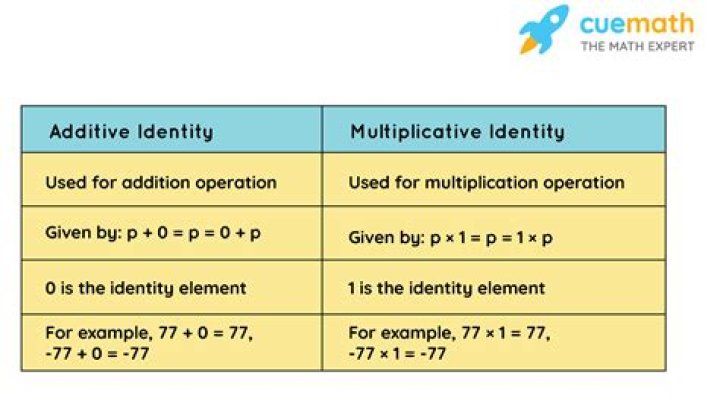
$\begingroup$You must be careful to distinguish between a unit (i.e. an invertible element of the ring) and the identity element $1$ (also often called the unit, but this can lead to confusion). Note that the identity element is its own inverse and thus $1$ is always a unit. It is true that if $I$ is an ideal in a commutative ring $R$ with identity $1$ and $1 \in I$ then $I = R$. But in fact we can say more:
Proposition. Let $I$ be a left or right ideal of a ring $R$ with unity. Then $I = R$ if and only if $I$ contains a unit.
Proof: Let $I$ be a left ideal of $R$. If $I = R$ then $1 \in I$, so $I$ contains a unit. Conversely, if $u \in I$ is any unit, let $u^{-1}$ be its inverse. For any $r \in R$, we have $r = r (u^{-1} u) = (r u^{-1}) u \in I$, because $I$ is a left ideal. Thus $I = R$. This logic is easily adapted for right ideals to show the same result. Certainly it then is true for two-sided ideals and ideals of unital commutative rings.
$\endgroup$$\begingroup$Suppose that $I$ is an ideal, and $u$ is a unit inside $I$. If $I$ is an ideal then: $$\text{if $r\in R$ and $a\in I$, then $r\cdot a ,a\cdot r \in I$} $$ Because $u\in I$, and $u$ is a unit, then $r\cdot u = r \in I$, and $u\cdot r = r \in I$ for all $r\in R$. So, every element in the ring is an element of the ideal, and the ideal is a subset of the ring, so they must be equal.
$\endgroup$$\begingroup$If $1 \in I$ and $r$ is any element in your ring, then $r = r \cdot 1 \in I$ by the closure property of ideals. Hence, $R \subset I \subset R$.
$\endgroup$